

Winter is when your home’s electrical safety systems work overtime, and February is a smart moment to double-check that everything is ready for the rest of the season. With heaters running, windows closed, and more time spent indoors, functioning alarms are essential for protecting your household. Homeowners relying on carbon monoxide and smoke detectors in Cedar Falls, IA should take a proactive approach now to ensure these critical devices are operating exactly as they should.
Why Winter Puts Extra Strain on Electrical Safety
Cold weather increases the demand on your electrical system. Space heaters, electric blankets, heat lamps, and holiday décor that may still be plugged in can all stress circuits and increase fire risk. At the same time, fuel-burning appliances like furnaces and water heaters produce carbon monoxide, making reliable CO detection especially important during winter months. Electrical safety isn’t just about avoiding outages—it’s about preventing hazards before they escalate.
Testing Smoke and Carbon Monoxide Detectors
February is an ideal time to test every smoke and carbon monoxide detector in your home. Press the test button on each unit and listen for a strong, consistent alarm. If a detector chirps intermittently, that’s usually a sign of a low battery, but it can also indicate the unit is nearing the end of its lifespan.
Smoke detectors typically last 8–10 years, while CO detectors often need replacement after 5–7 years. If you’re unsure about the age or condition of your detectors, our electricians can test them properly and recommend replacements when needed.
Proper Placement Matters More Than You Think
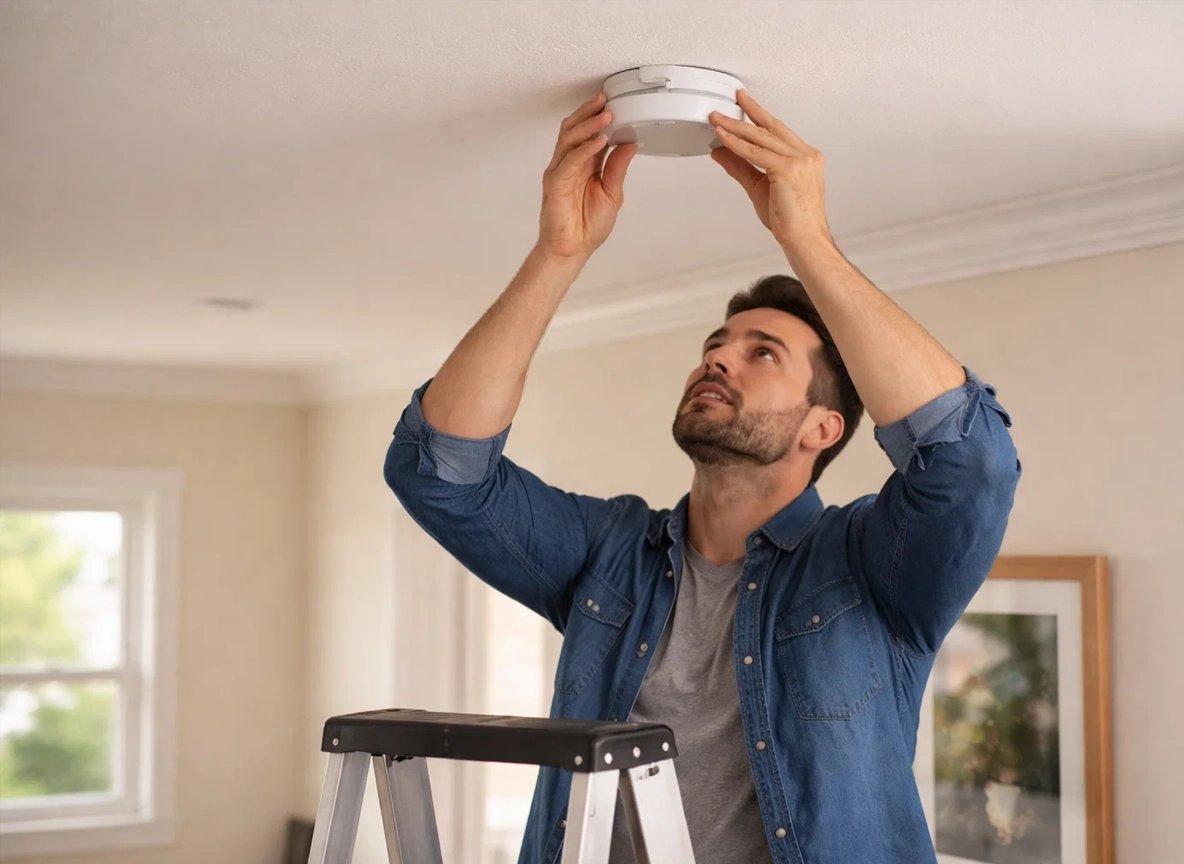
Even fully functional detectors can fail to protect your home if they’re not installed in the right locations. Smoke detectors should be placed on every level of your home and near sleeping areas, while carbon monoxide detectors should be installed near bedrooms and fuel-burning appliances.
Avoid placing detectors too close to kitchens or bathrooms, where steam or cooking fumes can cause nuisance alarms. Our expert electricians can evaluate placement and install detectors exactly where they’ll be most effective.
Checking Your Home’s Electrical System for Fire Risks
Beyond alarms, winter is a good time to assess overall electrical safety. Flickering lights, warm outlets, frequently tripped breakers, or the use of multiple extension cords are all warning signs that your electrical system may be overloaded. Older homes, in particular, may not be equipped to handle modern winter energy demands. A professional electrical safety inspection can uncover hidden issues like damaged wiring, loose connections, or outdated panels that increase fire risk.
When to Call Our Expert Electricians
If testing detectors feels uncertain, alarms don’t respond correctly, or you’re concerned about electrical safety in general, it’s time to call in professionals. Our expert electricians are ready to help with testing and installing smoke and CO detectors, conducting thorough electrical safety inspections, and addressing potential hazards before they become emergencies. February is the perfect time to take action—ensuring your home stays safe, secure, and worry-free for the rest of winter and beyond.
At Dalton Plumbing, Heating, Cooling, Electric and Fireplaces, Inc., your comfort is our promise! Contact us today for help with your carbon monoxide and smoke detectors in Cedar Falls, IA.