

Whole-home repiping can sound like a major undertaking, but understanding what to expect can make the process much less intimidating. If you are considering repiping in Cedar Falls, IA, it helps to know that every home is different, yet most projects follow some basic steps.
The goal is straightforward: replace problematic supply piping with a dependable system designed to serve your home for years to come. With a clear plan, homeowners can approach the work with confidence and fewer surprises.
Why a Home May Need New Pipes
Repiping is generally considered when existing pipes have reached the end of their useful life or are experiencing recurring problems. Depending on your home’s age and the materials used, pipes may develop corrosion, mineral buildup, pinhole leaks, or other deterioration. Older piping materials can also become increasingly vulnerable to failure over time. Instead of repeatedly repairing individual sections, replacing the system may provide a more practical long-term solution.
Clues You Should Not Ignore
How do you know your plumbing may be heading in this direction? Frequent leaks are an important warning sign, especially when they occur in different areas of the home. Discolored water, unusual tastes or odors, reduced water pressure, or rusty-looking water can also point to deteriorating pipes.
You may notice damp spots, water stains, or unexplained increases in water usage when a hidden leak develops. If several of these issues are appearing, it is worth having our qualified plumbing professionals evaluate the condition of your pipes.
What the Project Usually Involves
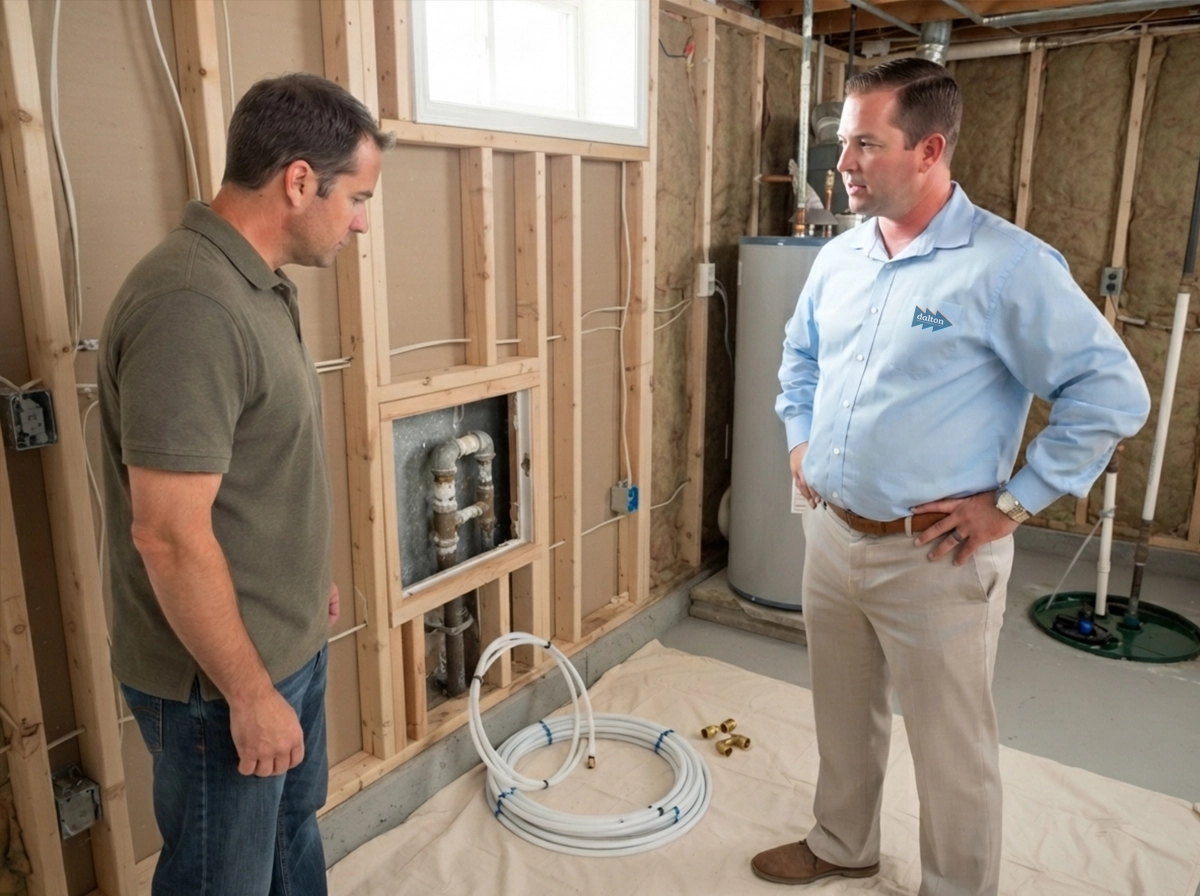
Your plumbing professional will first assess the existing system and determine which pipes need replacement. The team can then discuss the recommended approach, including the piping materials, locations involved, expected timeline, and how access will be handled.
During installation, portions of walls, ceilings, floors, cabinets, or other finished areas may need limited access so the team can remove old piping and install new lines. The extent of this work depends heavily on your home’s layout and construction.
What About Water Service?
Because the existing supply lines are being replaced, there will typically be periods when water service must be turned off. Your plumbing team should explain when interruptions are expected and work efficiently to minimize disruption. Before considering the project complete, the new system should be checked carefully for leaks and proper operation, so you can be confident your home’s water supply is ready for everyday use.
A Manageable Path Forward
Although repiping may seem overwhelming at first, professional planning can make the process much more manageable. A thorough evaluation helps identify the underlying problem rather than simply chasing one leak after another.
Our expert team is here to explain whether repiping makes sense for your home, explain what the project could involve, and answer your questions along the way. If your plumbing is showing repeated signs of trouble, reaching out sooner can help you explore your options before a small problem becomes a major disruption.
At Dalton Plumbing, Heating, Cooling, Electric and Fireplaces, Inc., your comfort is our promise! Contact us today for whole-home repiping in Cedar Falls, IA.