

Winter brings cozy nights and higher energy use, but it can also expose hidden problems in your home’s electrical system. When outlets suddenly stop working, flicker, or feel warm to the touch, it’s more than an inconvenience—it can be a warning sign. Homeowners who rely on us for all things electrical in Des Moines often notice these issues during the colder months when heaters, holiday lighting, and appliances are working overtime.
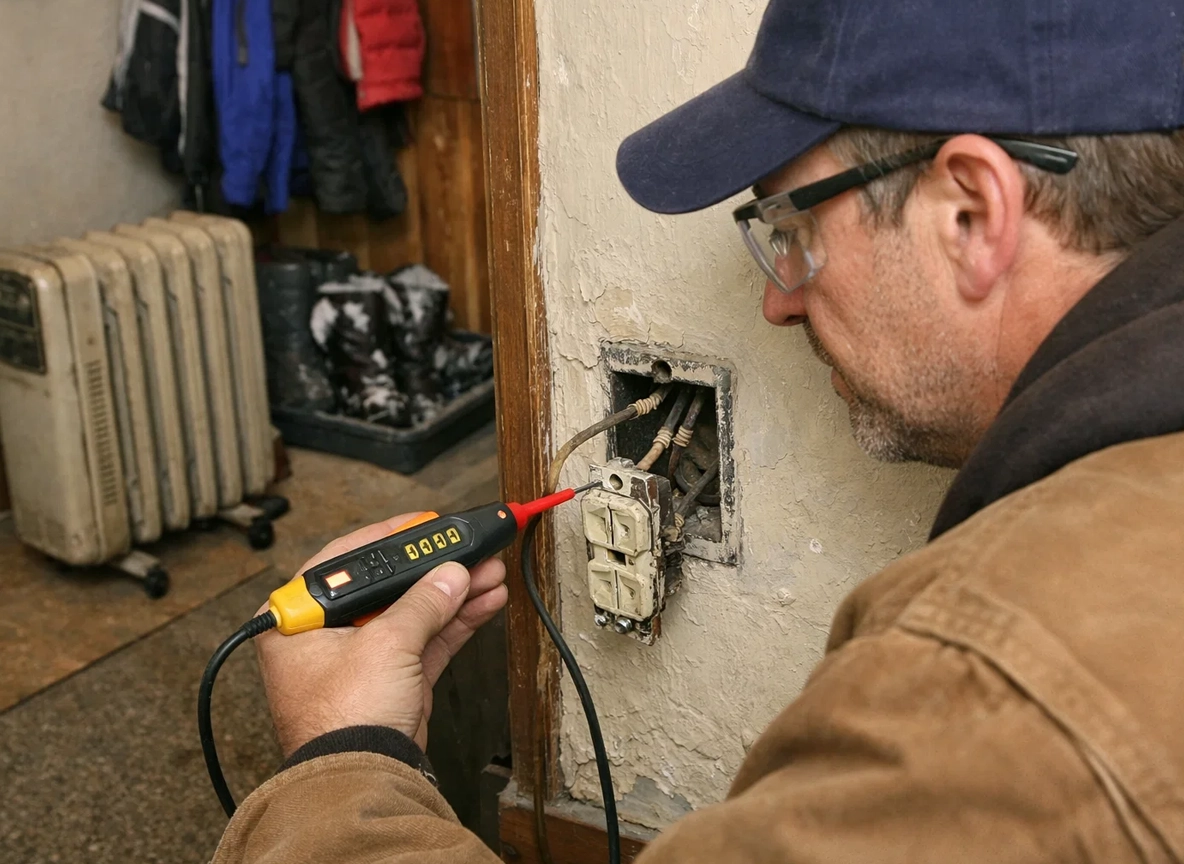
Overloaded Circuits from Increased Winter Use
One of the most common reasons outlets stop working in winter is overloaded circuits. Space heaters, electric blankets, extra lighting, and kitchen appliances can easily push circuits beyond their limits. When this happens, breakers may trip or outlets may shut down to protect your home. While resetting a breaker may restore power temporarily, repeated overloads can damage wiring and outlets over time, increasing the risk of electrical fires.
Tripped GFCI Outlets You Didn’t Notice
Ground Fault Circuit Interrupter (GFCI) outlets are designed to shut off power when they sense a problem, protecting you from shock. In winter, moisture from snow, melting ice, or condensation can cause GFCIs to trip—sometimes in unexpected places, such as garages, basements, or outdoor outlets. When a GFCI trips, it can cut power to multiple downstream outlets, making it seem as if several outlets have failed at once.
Cold Temperatures and Aging Wiring
Cold weather can be tough on older electrical systems. As temperatures drop, wiring materials can contract, loosening connections behind outlets or inside junction boxes. Loose wiring may cause outlets to stop working intermittently, spark, or feel warm. These are serious warning signs that should never be ignored, especially in homes with older wiring that may not meet today’s electrical demands.
Hidden Damage From Rodents or Moisture
Winter often drives rodents indoors, and unfortunately, electrical wiring is a common target. Chewed wires behind walls can interrupt power to outlets and create fire hazards. Additionally, moisture from winter weather can seep into walls or outdoor outlets, leading to corrosion and electrical failure. These issues are rarely visible but can have dangerous consequences if left unchecked.
Warning Signs You Should Never Ignore
If your outlets aren’t working, look out for signs such as burning smells, buzzing sounds, scorch marks, frequent breaker trips, or warm outlets. These symptoms indicate underlying electrical problems that require immediate professional attention. DIY fixes may seem tempting, but electrical issues can escalate quickly without proper training and tools.
When to Call a Professional Electrician
Winter electrical problems are not something to wait out. If you notice outlets not working or any warning signs with your home’s electricity, reach out to our expert team right away. We’ll inspect your system, identify the root cause, and make safe, reliable repairs to restore power and protect your home. Prompt professional service not only keeps your family safe but also helps prevent more costly electrical damage down the road.
At Dalton Plumbing, Heating, Cooling, Electric and Fireplaces, Inc., your comfort is our promise! Contact us today for electrical services in Des Moines, IA!