

Before freezing weather arrives, take time to prepare your hoses and outdoor plumbing in Des Moines, IA for winter. A garden hose may seem harmless when temperatures drop, but water trapped inside it can freeze, expand, and create enough pressure to damage the hose or connected plumbing. A few simple steps now can help prevent an inconvenient winter repair.
Turn Off the Water
Start by shutting off the interior water supply valve that controls each outdoor faucet, if your home has one. Then go outside and open the hose bib to let the remaining water drain. Leave the faucet open briefly so water can escape rather than remaining trapped in the pipe.
If your outdoor faucet has a separate shutoff valve, make sure it is fully closed. Never assume that closing the outdoor faucet removes all the water from the supply line. For frost-free hose bibs, disconnecting the hose is especially important because a connected hose can prevent the faucet from draining properly.
Disconnect and Drain the Hose
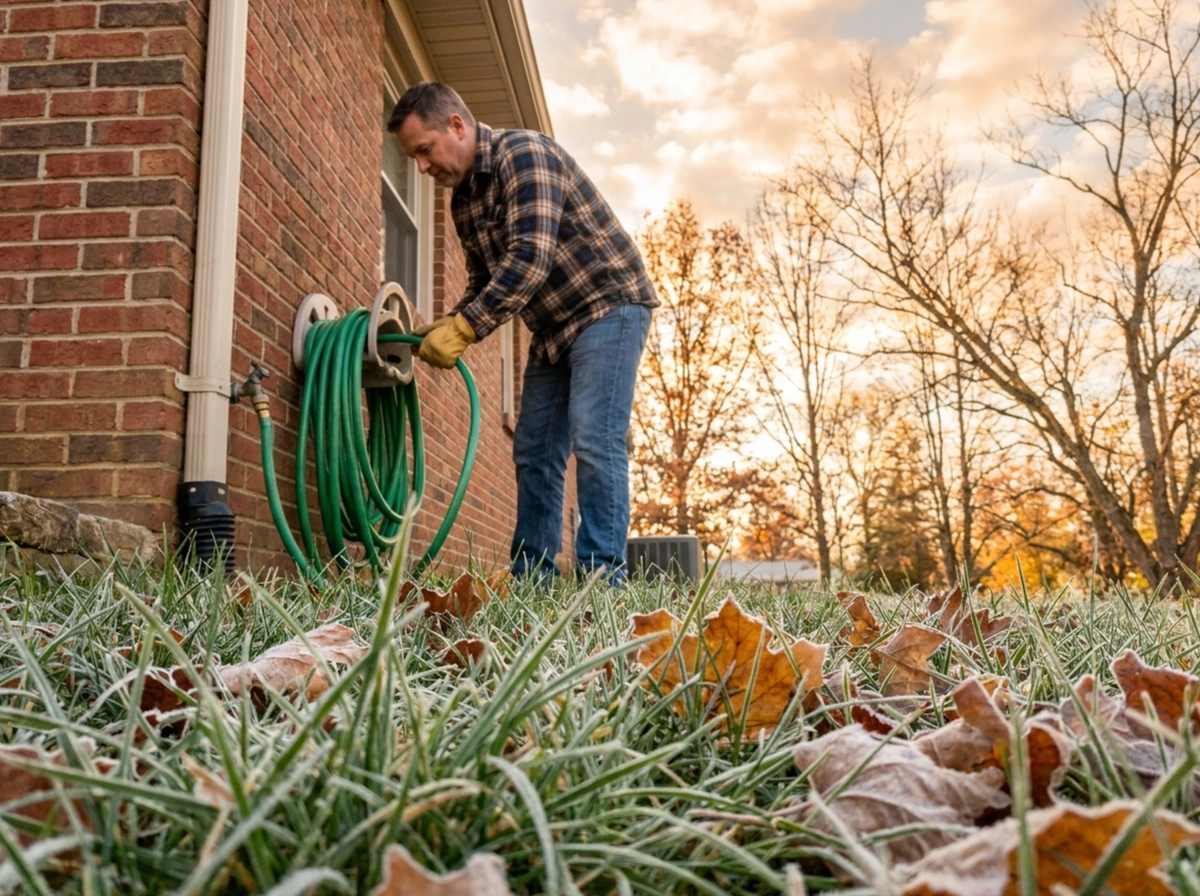
Remove every garden hose from its faucet before freezing temperatures arrive. Drain each hose completely by holding it at an angle and allowing water to run out. You can also stretch it on a sloped surface so trapped water can escape.
Avoid leaving hoses attached through winter, even if they appear empty. Ice expansion can damage the hose bib and, in some situations, cause a hidden leak inside the wall.
Store Hoses Properly
Once the hoses are drained, coil them loosely without sharp bends or kinks. Store them somewhere dry and protected from freezing temperatures, such as a garage or shed. Keep them off the ground if possible, and avoid placing heavy objects on top of them. Before storage, look for cracks, splits, bulges, or damaged connectors so you can replace worn hoses before next spring.
Check the Faucet and Hose Bib
While disconnecting your hoses, inspect each outdoor faucet. Look for dripping water, corrosion, cracked components, loose fittings, or signs of previous freezing damage. If water continues to flow after the interior shutoff is closed, that can indicate a valve problem. A faucet that leaks from the handle or connection should also be addressed before winter.
Know When to Call the Experts
Some outdoor plumbing problems are not safe or practical to handle yourself. Contact our expert team if you notice persistent dripping, weak or irregular water flow, visible cracks, unexplained dampness around an exterior wall, or evidence that a pipe may have frozen or burst. Do not ignore a small plumbing leak simply because the faucet is outside; hidden water damage can become much more expensive.
Finish Before the First Freeze
Getting hoses disconnected and outdoor faucets properly drained is a small task that can protect your plumbing when temperatures plunge. Make it part of your fall maintenance routine, and keep an eye on every hose bib throughout winter. If anything looks damaged or does not drain as expected, our team is ready to provide expert outdoor plumbing service before a minor issue becomes a major problem.
At Dalton Plumbing, Heating, Cooling, Electric and Fireplaces, Inc., your comfort is our promise! Contact us today for help with your outdoor plumbing in Des Moines, IA!