

As heating season approaches, take a few minutes to make sure your carbon monoxide and smoke detectors in Cedar Falls, IA are installed, working, and ready to alert your household. Smoke can spread rapidly during a fire, while carbon monoxide (CO) is an invisible, odorless gas that can become dangerous when fuel-burning heating equipment, fireplaces, or other appliances malfunction. Working detectors provide an essential early warning when you may not otherwise recognize a threat.
Check Every Detector
Walk through your home and locate every smoke and CO detector. Make sure you have the appropriate devices on each level and outside sleeping areas, following the manufacturer’s installation recommendations and local requirements. Look for detectors that are missing, damaged, outdated, or showing signs of corrosion. If you cannot remember when a detector was installed, check its date or replace it according to the manufacturer’s guidance.
Press the Test Button
Testing an existing detector is straightforward. Press and hold the test button until the alarm sounds. You should hear a loud, distinct alarm, not a weak chirp or barely audible tone. Test smoke and CO functions on every applicable device according to the manufacturer’s instructions. Because the test button checks the alarm’s operation, it is an important routine check, but it does not replace replacing expired detectors or addressing other installation concerns.
Replace Batteries and Detectors
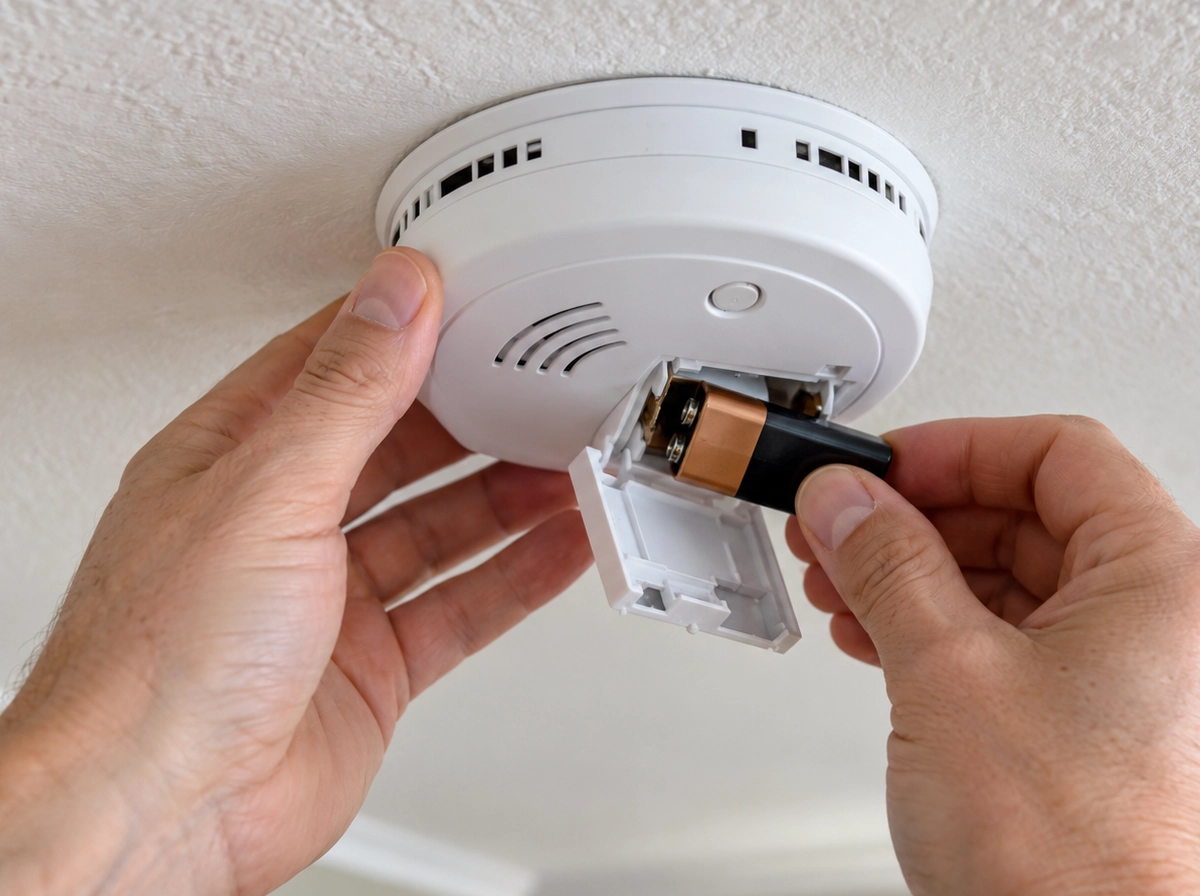
If your detector uses replaceable batteries, install fresh batteries when recommended by the manufacturer or when the low-battery warning sounds. Some newer models use sealed batteries designed to last for the detector’s rated life. Never ignore repeated chirping or a low-battery warning. If a detector continues to malfunction after fresh batteries or cannot be tested successfully, replace it rather than assuming it will work when needed.
Consider Detector Placement
Placement matters just as much as having detectors. Smoke alarms are generally installed on every level, outside sleeping areas, and inside bedrooms when recommended by current guidance. CO alarms should be placed according to manufacturer instructions, typically near sleeping areas and on each level where appropriate.
Never disable a detector because nuisance alarms are inconvenient; correct the underlying placement issue instead. Avoid locations where steam, cooking fumes, drafts, or other conditions can cause nuisance alarms unless the manufacturer specifically allows that placement.
When to Call Our Electrical Team
Sometimes a quick test reveals a bigger issue. If your home lacks enough detectors, you are unsure whether they are correctly positioned, or existing devices are unreliable, our expert electrical team can help. We can evaluate your current setup, identify gaps, and help make sure your detectors are properly installed and functioning.
Get Ready Before the Heat
Do not wait for the first cold night to discover a dead battery or missing detector. Test your alarms now, replace anything questionable, and address installation concerns before your heating system starts running regularly. A few minutes of preparation can help ensure your household has the warning it needs throughout the heating season.
At Dalton Plumbing, Heating, Cooling, Electric and Fireplaces, Inc., your comfort is our promise! Contact us today for help with carbon monoxide and smoke detectors in Cedar Falls, IA.