

As temperatures drop, portable space heaters can provide extra warmth in chilly rooms, but using them incorrectly can create serious fire and electrical hazards. When considering electrical safety in Des Moines, IA, homeowners should understand why plugging a space heater into an extension cord is generally unsafe and what precautions can help protect their homes throughout the heating season.
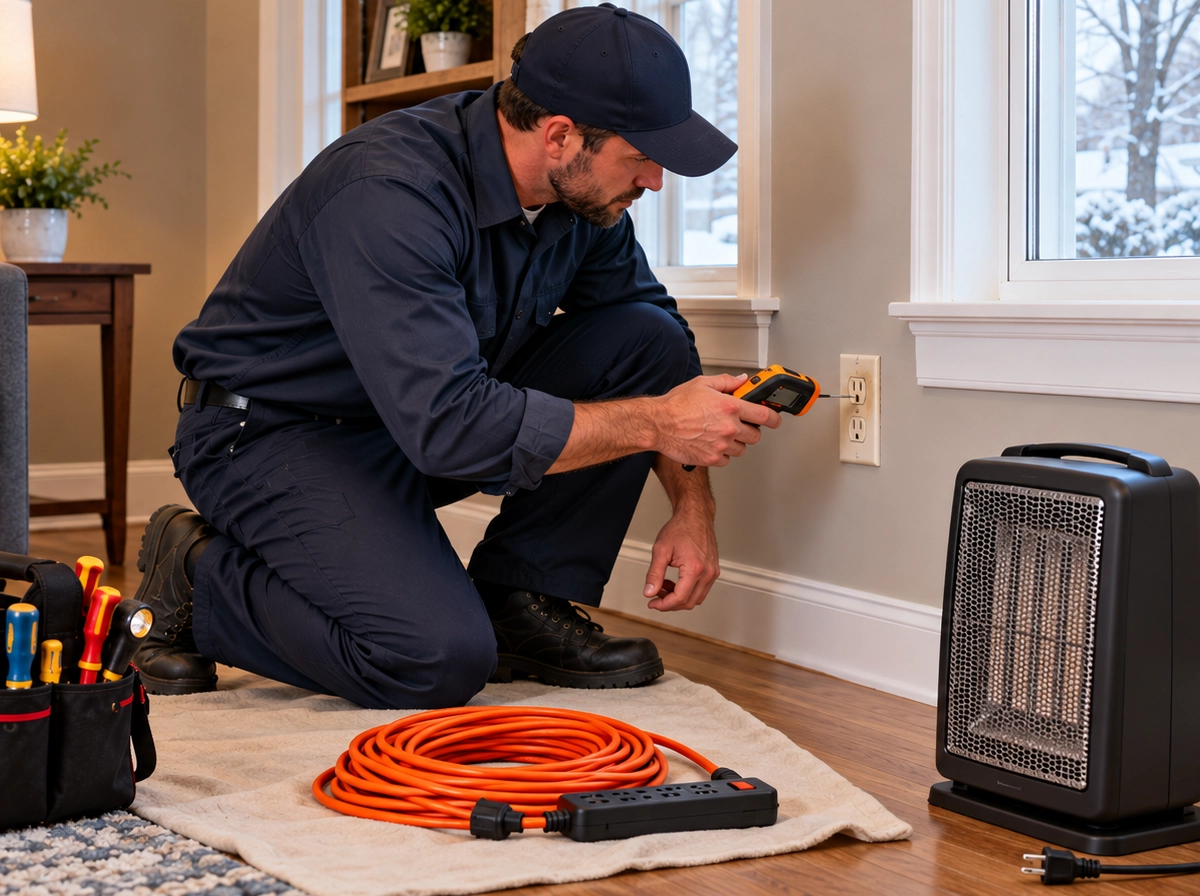
Why Extension Cords and Space Heaters Are a Risky Combination
Space heaters draw substantial electrical current to generate heat. Many household extension cords are not designed to handle that sustained load, which can cause the cord to overheat, melt, or ignite nearby materials. Even a heavy-duty extension cord can introduce additional resistance and connection points that increase the risk of overheating.
For this reason, manufacturers and fire safety experts generally recommend plugging portable electric space heaters directly into a properly installed wall outlet. Avoid using extension cords, power strips, or surge protectors with space heaters unless the manufacturer’s instructions explicitly permit the arrangement.
Choose a Safe Location for Your Heater
Where you position a space heater matters just as much as how you power it. Place the unit on a level, stable, nonflammable surface where it cannot tip over easily. Keep it at least three feet away from curtains, bedding, upholstered furniture, clothing, paper, and other combustible materials, or farther away if the manufacturer requires it.
Never place a space heater near water, in a damp location unless specifically rated for that environment, or where someone might trip over its power cord. Keep children and pets at a safe distance, and never leave a running heater unattended or operating while everyone is asleep. Choose a model with recognized safety certification and automatic tip-over and overheat protection.
Inspect Outlets and Watch for Warning Signs
Before using a space heater, examine its power cord and plug for fraying, cracks, discoloration, or other damage. Check the wall outlet for looseness, scorch marks, buzzing, or a burning smell. Do not use an outlet that feels unusually warm or shows signs of damage.
If a plug or outlet becomes hot, stop using the heater and disconnect it if you can do so safely. Do not touch damaged electrical components or attempt repairs yourself. Repeatedly tripping breakers, flickering lights, or outlets that spark also warrant professional attention. Never replace a breaker with one rated for a higher current to prevent tripping.
Know When Your Electrical System Needs Attention
Older homes, overloaded circuits, outdated wiring, and insufficient outlet capacity can make winter electrical use more hazardous. Running multiple high-wattage appliances on the same circuit may overload it, even when each appliance works normally on its own.
Our expert electrical team can inspect your home’s wiring, outlets, circuit breakers, and electrical panel to identify potential hazards and recommend appropriate repairs or upgrades. An inspection is especially worthwhile if your home has aging wiring, frequently tripped breakers, or outlets that show signs of wear.
Stay Warm Without Taking Unnecessary Risks
For peace of mind this winter, schedule an electrical safety inspection with our expert electrical team. We can help identify concerns before they become emergencies, so your household can stay warm while keeping electrical safety a priority.
At Dalton Plumbing, Heating, Cooling, Electric and Fireplaces, Inc., your comfort is our promise! Contact us today for help with electrical safety in Des Moines, IA!